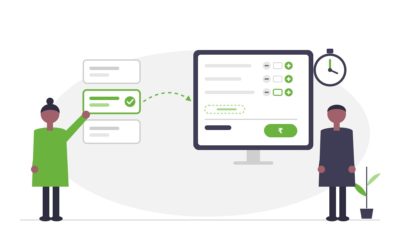
At a glance: An English-medium CBSE school on Diamond Harbour Road in South 24 Parganas, with more than 700 students, sells a class-wise kit of books, uniforms and notebooks to every family at admission and readmission time. Parents pay at a billing counter, take a delivery order to a separate dispatch department and collect the kit there. The school needed parents to see one kit at one price, while management saw item-level cost and profitability behind it. Vawsum’s Inventory Management System was configured to run the whole chain: purchase prices, a bill of materials for each class’s kit, kit contract prices with expiry dates, item-level profitability, delivery orders, part and full payment, part and full delivery, exchanges and live stock levels. The school now handles everything from purchase to dispatch in one system.
The problem
At the start of every academic year, this school sells hundreds of kits in a few weeks. Each class has its own kit. A Class 7 kit, for example, holds a particular set of books, the uniform and a fixed set of notebooks. Families buy the kit as one thing, and the school runs the sale through two separate desks: a billing counter that takes the money and a dispatch department that hands over the goods.
That arrangement is sensible, but it puts several demands on whatever system sits behind it:
- Two desks, one transaction. The billing counter and the dispatch department had to agree on what each family had paid for and what it had received, without a phone call between them for every parent.
- One price for the parent, many costs for the school. Parents should see a single kit at a single contract price. Management needed to know what each item inside that kit cost to buy and what it earned, because a kit is profitable or not one item at a time.
- Prices that change. Purchase prices move from year to year. The school sets item-level and kit-level price forecasts before the season, and the contract prices it agrees for kits must hold for a defined period and then expire.
- The dispatch counter is never tidy. Some items are out of stock on the day. A child needs a different shirt size from the one billed. Some families pay in part. Any system that assumed one payment and one complete handover would break on the first morning of the season.
From billing counter to dispatch desk, in one system
A single kit price for parents, item-level cost and profitability for the school
Parents buy a kit. The school sees every item inside it.
What changed
The school’s inventory was set up in Vawsum around the kit, while keeping every item inside it visible:
- Purchase prices recorded for every item. Books, uniforms and notebooks are bought and received into stock with their purchase prices, so the cost side of every kit starts from real figures.
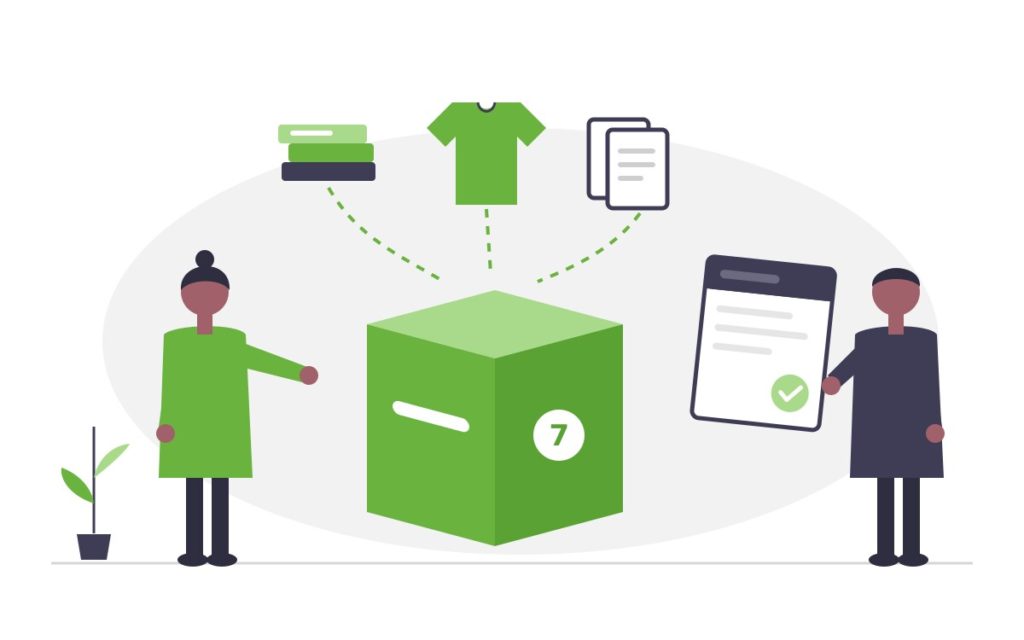
- A bill of materials behind every kit. Each class’s kit is defined as a recipe of the items that make it up. Selling a Class 7 kit therefore draws down exactly the right books, uniform and notebooks from stock, item by item.
- Kit contract prices, with expiry. The school sets a contract price for each class’s kit, alongside item-level selling prices. The two are deliberately different, and both carry validity periods, so a price agreed for one season expires instead of carrying silently into the next.
- Item-level profitability, computed. With purchase cost, item-level prices and the kit price all in the system, profitability is calculated for each item inside the kit. Management can see which items carry the kit and which ones it subsidises, instead of judging the kit as one undivided number.
- Forecasts before the season. The school records item-level and kit-level price forecasts ahead of admissions, so pricing decisions are made against expected costs before the counters open.
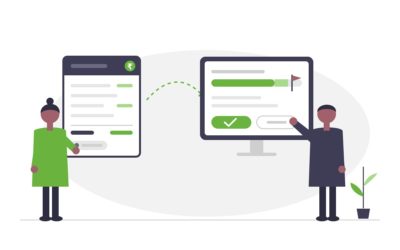
- A delivery order linking the two desks. The billing counter takes payment and issues a delivery order. The parent takes it to the dispatch department, which hands over the kit against it. Both desks work from the same record.
- Part payment and part delivery. A family can pay in full or in part. When an item is out of stock, dispatch hands over what is available and the rest stays recorded as pending, to be delivered later without re-billing.
- Exchanges at the dispatch desk. If a child needs a different shirt size from the one billed, the exchange is recorded against the original sale and stock adjusts correctly.
- Live stock levels. Stock reduces as kits and items go out, so the school can see during the season what is running short and needs to be reordered.
None of this is special code for one school. Kits, pricing rules, payment and delivery options and exchanges are all configuration, so another school can switch on the parts that match how it sells and leave the rest off.
The result
The school now runs the entire cycle in one system, from buying stock to the last kit handed over. Parents see a single kit at a single price. The billing counter and the dispatch department work from the same delivery order. When an item runs out or a size is wrong, the counter records a part delivery or an exchange instead of improvising.
Behind the counter, management finally has the view it wanted: what each kit costs to assemble, what each item inside it earns, and how both compare with the forecasts made before the season. Pricing for next year can start from this year’s actual profitability rather than last year’s guesses.
The school has been very happy with the system, and admission season is now something its inventory handles rather than something its staff absorb.
It complements the school’s money side as well. Fee collection runs through the Fee Management System, and spending can be controlled through Expense and Purchase Voucher Management, as a North 24 Parganas fine arts college did.
FAQs
Can a school sell books, uniforms and notebooks as one kit?
Yes. Each kit is defined by a bill of materials listing the items that make it up, typically one kit per class. Parents buy the kit as a single item, and the system draws down each component from stock.
Can the kit price differ from the total of the item prices?
Yes. The school sets a kit contract price and item-level selling prices separately. Profitability is still computed at item level, so the school can see what each item contributes even though parents pay one kit price.
Do contract prices expire?
Yes. Contract and selling prices carry validity periods, so a price agreed for one admission season expires rather than carrying into the next.
What happens if an item is out of stock when the parent arrives at dispatch?
Dispatch hands over what is available and records a part delivery. The remaining items stay pending against the same sale and are delivered later, without the parent being billed again.
Can a parent exchange an item, such as a uniform size?
Yes. Exchanges are recorded against the original sale at the dispatch desk, and stock adjusts for both the item returned and the item given.
How do the billing counter and dispatch department stay in sync?
Through the delivery order. The billing counter issues it when payment is taken, and dispatch delivers against it, so both desks work from the same record.
Does every school have to use kits this way?
No. Kits, pricing, part payment, part delivery and exchanges are all configurable, so each school switches on what fits how it sells.
Running a school in Kolkata or anywhere in West Bengal and selling kits at admission time? See how Vawsum pricing works or send us an enquiry.
See related case studies: how a Kolkata school cut counter billing to a few clicks with editable sales voucher templates, how a fine arts college in North 24 Parganas made every payment wait for in-system approval, with budget flags at the approval step, how a trust-run South 24 Parganas school moved fee collection 100% online in three months with zero gateway charges, how a 1,000+ student Burdwan school replaced cash and screenshot-based collection with an auditor-ready fee system, how a reputed ICSE school ran 1,000+ annual admissions through one auditable pipeline, how a CBSE school in Siliguri fixed chronic late fee payment by linking admit card downloads to a fee-clearance cutoff, how one 8-branch school group cut its payroll cycle from a week to under a day, how a residential school in Siliguri turned leave policy into a configurable rules engine, how a Kolkata residential school made hostel attendance verifiable with four daily checkpoints, how a multi-branch Kolkata school tracked transport with QR codes alone, how a Bengali-medium school with zero computers went digital using nothing but phones, how a Jalpaiguri school rebuilt its annual ID card renewal in two days, and how a school with 100+ teachers replaced its daily substitute scramble with rule-based, auditable allocation.





Recent Comments