At a glance: A school in Kolkata sells a largely standard set of items to parents at its billing counter, but parents often want to change the list at the very last moment: add a few items, drop some, or change a quantity. Building each bill line by line made the counter slow. Using the sales voucher templates in Vawsum’s Inventory Management System, the school now prepares templates in advance. The person at the counter picks the right template, the items, quantities and prices fill in automatically, any changes the parent asks for are made on the spot, and the total updates itself. A job that used to take a long time is now done in a few clicks.
The problem
Most of what this school bills at its counter is predictable. Parents of a given class tend to buy much the same items in much the same quantities. But “much the same” is not “exactly the same”. At the counter, a parent might want two extra notebooks, skip an item the child already has, or change the number of something else.
That combination is what made billing slow:
- Every bill was built from scratch. Even when a parent was buying the usual set, the billing staff entered each item, its quantity and its price one by one.
- A fixed bundle would not have worked either. Selling a locked package would have been quicker, but parents needed the freedom to change the list, and the bill had to reflect exactly what they took.
- Queues built up at peak times. When many families come in over a short period, a slow bill per family turns into a long wait for everyone behind them.
- Manual entry invites mistakes. Typing the same items and prices again and again is exactly where a wrong quantity or price slips in.
The school needed the speed of a fixed list with the flexibility of a custom bill.
From building every bill to picking a template
Pre-filled sales vouchers that the counter can still change
The usual list, ready before the parent arrives
What changed
The answer was Vawsum’s template concept, applied to sales vouchers:
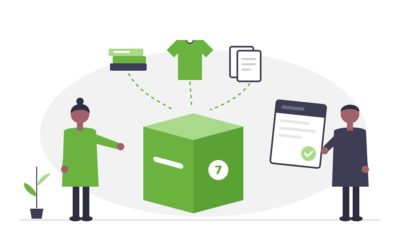
- Templates built in advance. Before the busy period, the school creates sales voucher templates for the sets it typically sells. Each template holds the list of items, the quantity of each and the price.
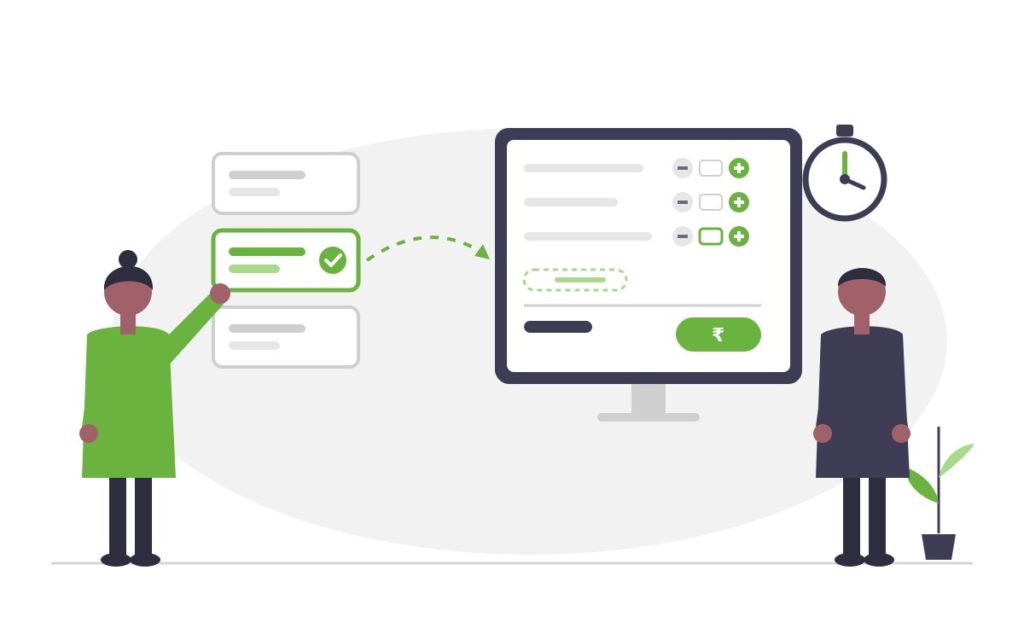
- Pick, don’t type. When a parent comes to the counter, the billing staff choose the appropriate template. The items, quantities and prices fill in automatically.
- Change anything before finishing. If the parent wants to add items, remove some or change a quantity, the staff adjust the pre-filled bill directly. Nothing is locked.
- Totals that follow the changes. Every adjustment recalculates the bill automatically, so the amount always matches what the parent is actually taking.
- Stock stays accurate. Because the final bill is a proper sales voucher in the inventory module, stock reduces by what was actually sold, including any last-minute changes.
The result
What used to be a long job per family is now a few clicks. For the usual set, the bill is essentially ready the moment a template is chosen. When a parent changes the list, the edit takes seconds rather than a fresh bill.
The counter moves faster, queues shorten at busy times, and with prices and quantities coming from the template rather than being retyped, there is less room for billing errors. The school saved a great deal of time and made the whole billing process more efficient, without taking away the flexibility parents expect.
Templates suit schools that sell a usual set but let parents change it. Schools that sell a fixed bundle at a single price, with item-level costing behind it, can use kits instead, as a CBSE school in South 24 Parganas did for its admission-season kits. Both run in the same module, and a school can use either approach.
FAQs
What is a sales voucher template?
A ready-made bill the school prepares in advance, holding a list of items, the quantity of each and the price. At the counter, choosing the template fills all of this in automatically.
Can the counter change a bill after picking a template?
Yes. Items can be added or removed and quantities changed before the bill is finished, and the total recalculates automatically.
How is a template different from a kit?
A template is a starting point for a bill that the counter can freely edit. A kit is a fixed bundle sold at a single contract price, with a bill of materials and item-level profitability behind it. Schools can use whichever fits how they sell, or both.
Does stock update correctly when a bill is changed?
Yes. The finished bill is a sales voucher in the inventory module, so stock reduces by exactly what was sold, including any items added, removed or changed at the counter.
How many templates can a school create?
As many as it needs, typically one for each common set it sells, such as one per class, so the counter always has the right starting point.
Running a school in Kolkata or anywhere in West Bengal with a busy billing counter? See how Vawsum pricing works or send us an enquiry.
See related case studies: how a CBSE school in South 24 Parganas ran class-wise admission kits from purchase to dispatch with item-level profitability, how a fine arts college in North 24 Parganas made every payment wait for in-system approval, with budget flags at the approval step, how a trust-run South 24 Parganas school moved fee collection 100% online in three months with zero gateway charges, how a 1,000+ student Burdwan school replaced cash and screenshot-based collection with an auditor-ready fee system, how a reputed ICSE school ran 1,000+ annual admissions through one auditable pipeline, how a CBSE school in Siliguri fixed chronic late fee payment by linking admit card downloads to a fee-clearance cutoff, how one 8-branch school group cut its payroll cycle from a week to under a day, how a residential school in Siliguri turned leave policy into a configurable rules engine, how a Kolkata residential school made hostel attendance verifiable with four daily checkpoints, how a multi-branch Kolkata school tracked transport with QR codes alone, how a Bengali-medium school with zero computers went digital using nothing but phones, how a Jalpaiguri school rebuilt its annual ID card renewal in two days, and how a school with 100+ teachers replaced its daily substitute scramble with rule-based, auditable allocation.






Recent Comments